
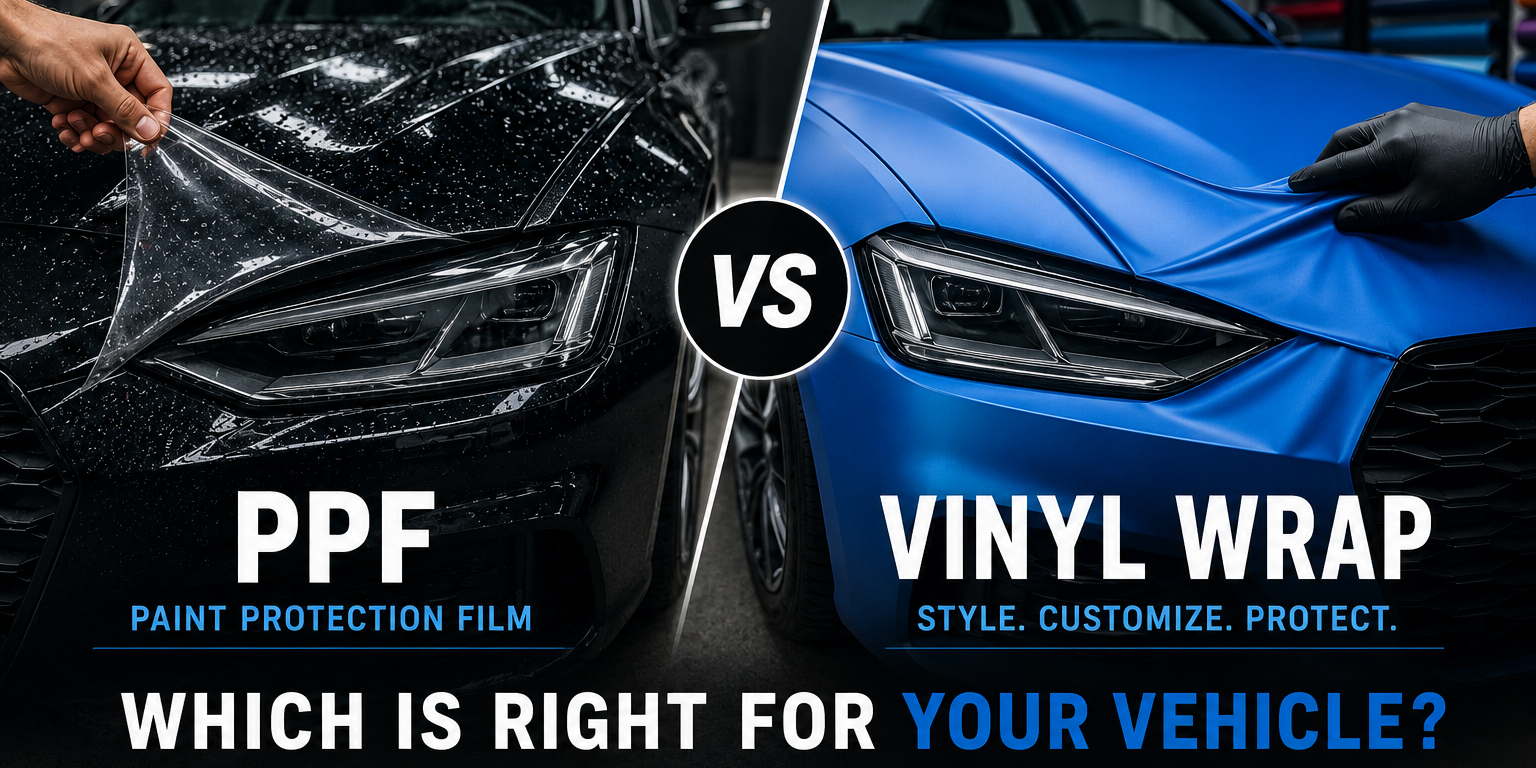
If you want to protect your vehicle, change its appearance, or do a little of both, you have probably encountered two popular options: paint protection film and vinyl wrap.
Although they are both applied over a vehicle’s painted surfaces, PPF and vinyl wrap are designed to accomplish different things. Paint protection film is primarily chosen to help protect the paint underneath. Vinyl wrap is primarily used to change the vehicle’s color, finish, or graphics.
Understanding the difference between PPF and vinyl wrap can help you choose the right material, coverage, and investment for the way you drive.
What Is Paint Protection Film?
Paint protection film, commonly called PPF or clear bra, is a durable film installed over painted vehicle surfaces. Clear PPF is designed to preserve the vehicle’s existing appearance while helping protect vulnerable areas from everyday road hazards.
Depending on the product selected, PPF may be available in clear gloss, matte, satin, or colored finishes. This means drivers can choose nearly invisible protection or explore options that combine paint protection with a different appearance.
PPF can help defend painted surfaces against:
- Rock chips and loose road debris
- Bug splatter
- Bird droppings and other contaminants
- Minor scratches and scuffs
- Stains and everyday road grime
- Wear around door edges, rocker panels, and loading areas
For Houston drivers who regularly travel on busy highways, construction corridors, and debris-prone roads, PPF provides a protective barrier between the vehicle’s finish and the conditions encountered during daily driving.
What Is a Vinyl Vehicle Wrap?
A vinyl wrap is a thin, flexible material applied over the vehicle to change its color, finish, or graphics without permanently repainting it.
Vinyl wraps are available in a wide range of colors and styles, including:
- Gloss colors
- Matte and satin finishes
- Metallic and color-shifting films
- Carbon-fiber and textured appearances
- Custom printed graphics
- Stripes, accents, and specialty designs
A vinyl wrap allows an owner to create a distinctive appearance while keeping the original paint underneath. It can also provide a light barrier against sun exposure, minor surface wear, and contaminants. However, standard vinyl should not be treated as a replacement for PPF when protection against rock chips and road impact is the main goal.
The Biggest Difference: Protection vs. Appearance
The simplest way to compare PPF and vinyl wrap is to identify the primary goal of each product.
Choose PPF Primarily for Protection
PPF is made for drivers who want to help preserve their vehicle’s painted finish. It is commonly installed on high-impact areas such as the front bumper, hood, front fenders, side mirrors, rocker panels, door edges, and areas behind the wheels.
Full-vehicle PPF is also available for owners who want more comprehensive coverage.
Choose Vinyl Primarily for Customization
Vinyl wrap is usually the better option when the main goal is to transform the vehicle’s appearance. It offers more flexibility for custom colors, printed artwork, branded graphics, racing stripes, and personalized designs.
Both materials can change the way a vehicle looks, especially with the growing availability of matte, satin, and colored PPF. The best choice still depends on whether protection or visual customization is the higher priority.
PPF vs. Vinyl Wrap at a Glance
Paint Protection Film
- Primarily designed to protect painted surfaces
- Offers stronger defense against chips and road debris
- Available in clear and selected colored or specialty finishes
- Can cover high-impact areas or the entire vehicle
- Helps preserve the appearance of the original paint
- Often chosen for new, luxury, performance, and enthusiast vehicles
Vinyl Wrap
- Primarily designed to change appearance
- Offers extensive color, finish, and graphic choices
- Can create a complete color change without repainting
- Works well for custom styling and commercial branding
- Provides limited protection from minor surface exposure
- Can be installed as a full wrap, partial wrap, stripe, accent, or graphic
When PPF May Be the Better Choice
PPF may be right for you if you like your vehicle’s current paint and want to help keep it looking newer for longer.
It is especially worth considering if:
- You recently purchased a new vehicle
- You drive a luxury, sports, performance, or collectible vehicle
- You spend significant time on Houston-area highways
- Your commute exposes the vehicle to gravel or construction debris
- You want to protect high-impact areas from rock chips
- Preserving the original paint is important to you
- You plan to keep the vehicle for several years
- You want to support its future resale or trade-in appearance
PPF does not make a vehicle immune to damage, but it adds a durable sacrificial layer over the paint. If the film becomes worn or damaged over time, it can be professionally removed and replaced without requiring a permanent color change.
When a Vinyl Wrap May Be the Better Choice
A vinyl wrap may be the better fit when your priority is creativity and visual transformation.
Consider vinyl if:
- You want a new color without repainting the vehicle
- You prefer a matte, satin, metallic, or specialty finish
- You want custom stripes, accents, or printed graphics
- You are building a distinctive show or enthusiast vehicle
- You want the option to return to the original color later
- You need business branding or advertising on a commercial vehicle
Vinyl can completely reinvent the appearance of a car, truck, SUV, van, trailer, boat, or other specialty vehicle. The design can be bold and attention-grabbing or subtle enough to look like a factory-inspired custom finish.
Can You Combine PPF and Vinyl Wrap?
In some projects, PPF and vinyl can be used together. For example, an owner may select a vinyl color-change wrap and explore additional protection for specific high-impact areas. Another owner may choose clear PPF over the factory paint and use vinyl accents to personalize selected parts of the vehicle.
The correct installation order and material combination depend on the products, surfaces, desired finish, and manufacturer requirements. Layering films can also affect appearance, removal, warranty coverage, and how edges are finished.
For that reason, a combined PPF and vinyl project should be planned with a professional installer before either material is applied.
Choosing the Right PPF Coverage
PPF does not have to cover the entire vehicle. Coverage can be tailored to the vehicle, driving habits, protection goals, and budget.
Common options include:
Partial Front Protection
This option generally covers the front bumper, part of the hood and fenders, and the side mirrors. It focuses on the painted areas most likely to encounter road debris.
Full Front Protection
A full-front package typically covers the complete hood, front bumper, front fenders, and side mirrors. Covering complete panels can create a cleaner, more seamless appearance.
High-Impact Area Protection
Additional film can be applied to rocker panels, door edges, luggage areas, rear-wheel impact zones, and other surfaces exposed to frequent wear.
Full-Vehicle Protection
Full-body PPF provides the most comprehensive coverage by protecting painted surfaces throughout the exterior.
Creative Wraps & Graphics can inspect your vehicle and recommend coverage based on where and how you drive.
The Condition of the Paint Matters
Neither PPF nor vinyl wrap repairs the paint underneath. Chips, scratches, oxidation, peeling clear coat, poor previous repairs, and other defects may remain visible after the film is installed.
Before wrapping a used vehicle, the installer should evaluate the paint and identify any areas that may require correction or repair. Factory paint in good condition generally provides the best installation surface.
Recently repainted panels also require special attention. The paint must be properly cured, and its condition should be discussed before applying or removing any film.
Professional Installation Makes a Difference
PPF and vinyl installation both require careful surface preparation, precise placement, controlled tension, clean trimming, and close attention to the vehicle’s curves and body lines.
PPF requires particular skill to achieve a smooth, discreet finish around complex shapes and edges. Vinyl wrap installation demands an understanding of how the selected material stretches, conforms, and aligns across panels.
Creative Wraps & Graphics brings trained installation and detailed craftsmanship to both vehicle protection and customization projects. The team can help you compare materials, understand coverage options, and develop a solution suited to your vehicle.
Which Option Is Right for You?
The answer comes down to your main objective:
- If protecting the original paint is the priority, begin with PPF.
- If changing the color or adding custom graphics is the priority, begin with vinyl wrap.
- If you want protection and a new appearance, ask about colored PPF or a professionally planned combination of materials.
You do not have to make the decision alone. A professional consultation can account for your vehicle, driving habits, appearance goals, budget, and preferred level of coverage.
Ready to explore your options? Learn more about paint protection film installation in Houston or contact Creative Wraps & Graphics for a personalized quote.
Frequently Asked Questions About PPF and Vinyl Wraps
Is PPF the Same as a Clear Vinyl Wrap?
No. Although both products are installed over painted surfaces, PPF and vinyl are made for different primary purposes. PPF is designed for paint protection, while vinyl is primarily intended for color changes and graphics.
Does Vinyl Wrap Protect Against Rock Chips?
Vinyl offers a light barrier against minor surface exposure, but it does not provide the same impact protection as PPF. Drivers primarily concerned about chips and road debris should discuss PPF coverage with an installer.
Can PPF Change the Color of a Vehicle?
Some PPF products are available in colored, matte, satin, or specialty finishes. Available choices depend on the product line and installer. Clear PPF remains a popular option for preserving the original color and gloss.
Can PPF or Vinyl Be Installed Over Damaged Paint?
The paint should be inspected first. Film will not hide all chips, scratches, peeling clear coat, oxidation, or poor repairs. Damaged areas may need professional correction before installation.
Can PPF and Vinyl Wrap Be Removed?
Yes, both can generally be professionally removed when replacement or a return to the original finish is desired. Paint condition, installation quality, material age, exposure, and previous repairs can all affect removal, so it should be handled by an experienced professional.
How Do I Care for PPF or a Vinyl Wrap?
Gentle hand washing with suitable automotive products is generally recommended. Avoid abrasive brushes, harsh chemicals, and careless high-pressure washing near film edges. Follow the specific care instructions provided for the material installed on your vehicle.